
Case study 03 · Classeh
Tamas Hooshmand
A business panel for setting up AI voice assistants, running call actions and reading the results, made for business owners, not engineers.
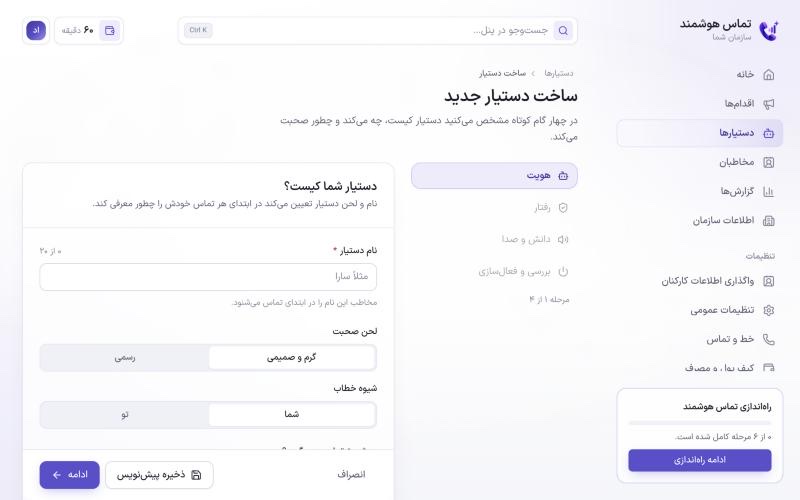
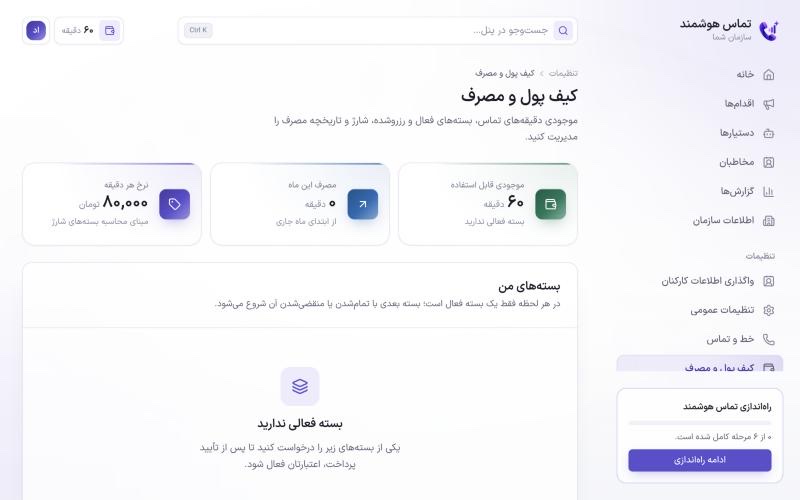
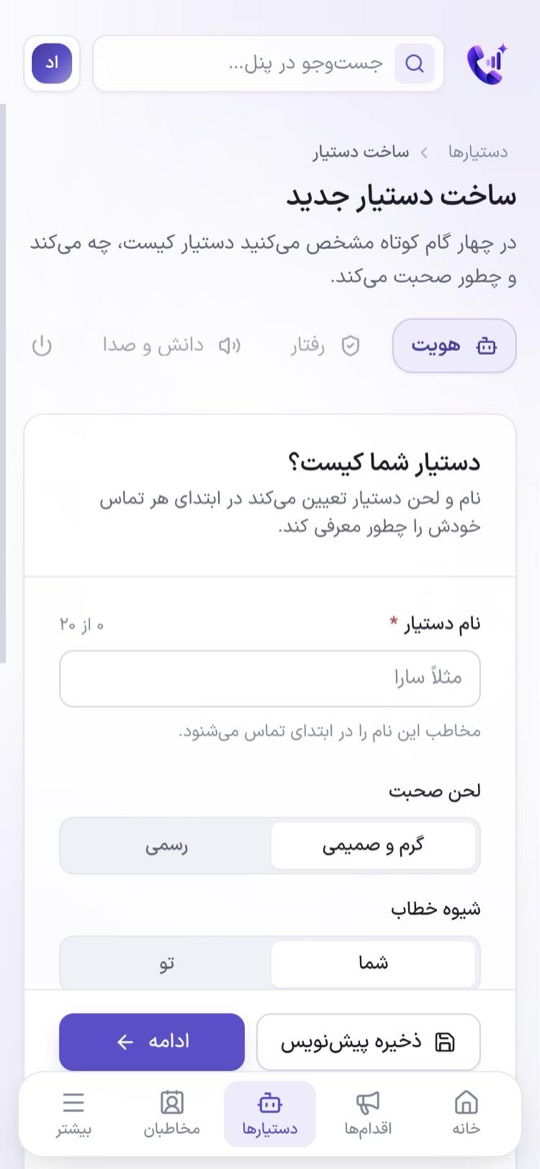
Screens from the live panel in November 2026, on a demo organisation with no calls yet.
01The problem
A voice assistant is set up through many small decisions: how it sounds, what it may do, what it knows, when it calls.
The panel has to turn that into a short, guided task, and make the results of calls easy to read for someone who isn't technical.
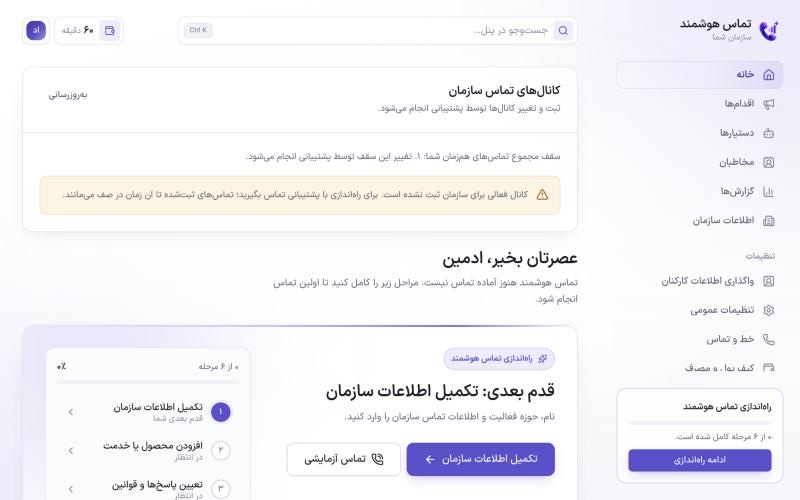
The MVP has six areas: a home view with overall status, important results and what needs attention; assistants; contacts; actions; results; and organisation information. Settings is marked “coming soon” rather than half-designed.
02My part
I design the panel's workflows and states and hand them to development.
Assistants
- Setup wizard
- Personality, abilities, proactivity
- Fallback behaviour
- Main and backup voice
Contacts and actions
- Import by group, file or one by one
- Groups and call history
- Actions: goal, assistant, group, time
Results
- Statistics and status filter
- Results table
- Contact and call detail panel
Account
- Organisation information
- Wallet and call-minute packages
Supporting material
- Light and dark logo
- Ten-slide catalogue
- Demo call conversations
- Interactive HTML prototype of the smart call, handed straight to the backend team
Production code and the backend are the development team's work.
03Constraints
Many settings, non-technical users
Personality, abilities, a level of proactivity, fallback behaviour and two voices, set up by business owners and staff.
Language that fits the business
The product first used “Agent” and “Campaign”, which don't match how a business talks about this work.
Call time sold as credit
Buying, approving and using call minutes had to be easy to follow inside an MVP.
04Key decisions
Names that match how businesses talk
Renaming changed the product's mental model as much as its copy. Keeping old links working through redirects became a handoff requirement.
A wizard instead of one long form
Setup is split into four short steps, so a business can configure an assistant without facing every option at once, and sees everything once more before it goes live.
Fixed packages, not custom amounts
Custom call-minute amounts were removed in favour of four fixed packages. That removed a whole class of states and made the flow shorter to explain.
Results that keep their context
A detail panel opens beside the results table, so someone can read one call without losing their place in the list.
05Flows and states
06Screens
07Status
I designed and handed off the MVP panel's workflows. Implementation differs by area, and I don't assume which parts match my handoff exactly.
I'm not quoting call success rates, cost savings or conversion: none have been measured for this work.
I can walk through the full spec and handoff files in an interview.
08What I learned
Naming is a design decision. Agent to Assistant and Campaign to Action changed the mental model as much as the copy.
Limiting choices can be the better design. Fixed packages kept the credit flow short and its states few.