
Case study 04 · Release UX
URYVA
Release UX for an AI platform: making AI use, data control, publishing and profile claims understandable before the first release.
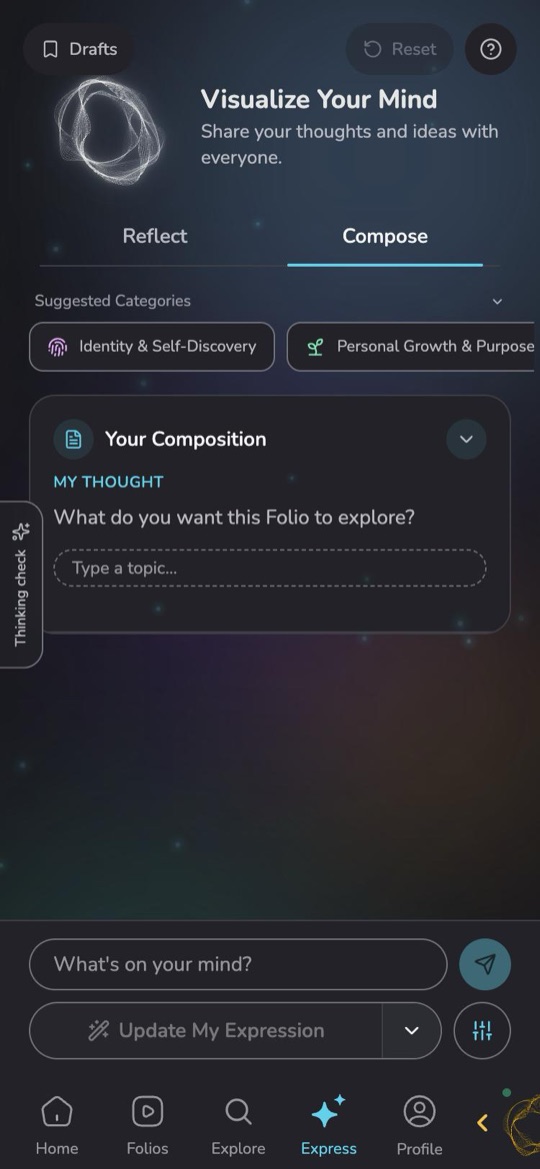
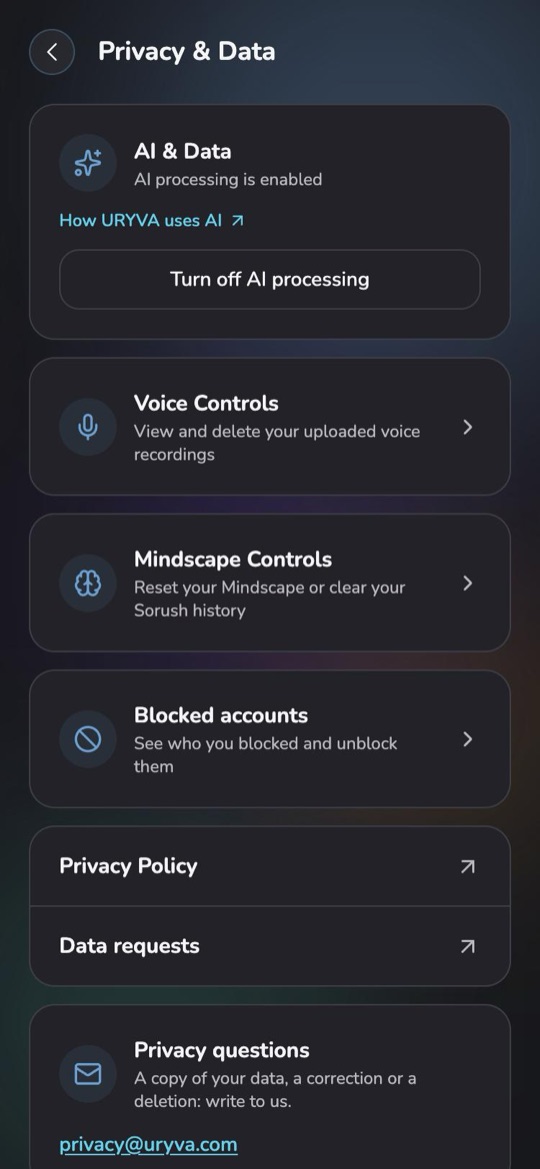
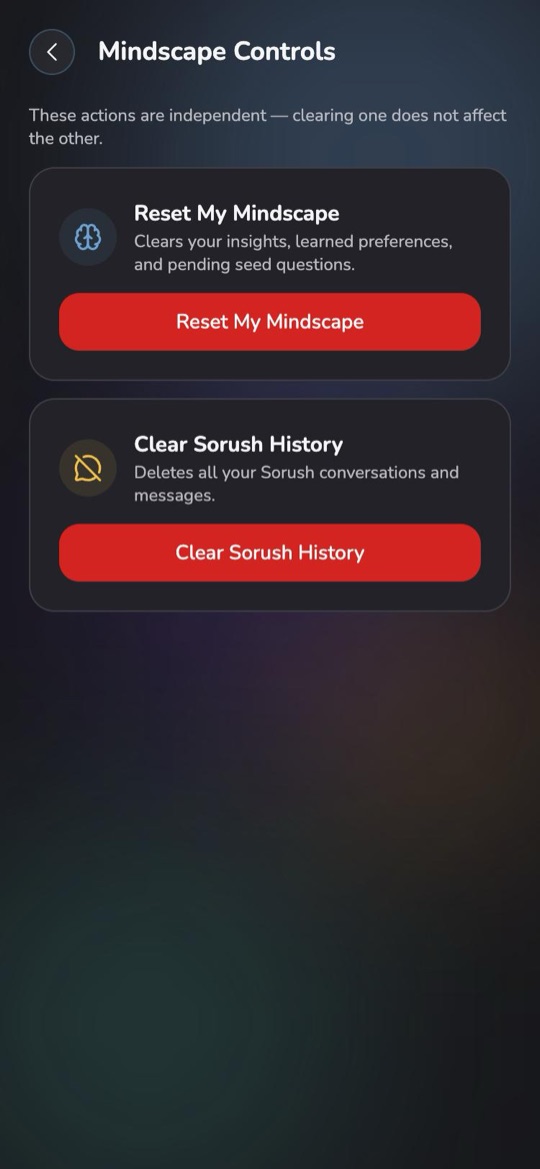
Screens from the live app in November 2026. I wrote the spec; I don't claim every detail on screen matches it.
01The problem
Turn a broad release brief into flows, states and decisions a team can build, and make AI use, data and publishing clear to the person using the product.
URYVA is a product where people create content, publish it and talk to an AI called Sorush. Ahead of its first release I reviewed the UI, designed behaviour, rewrote Sorush's role and documented what the team needed to build.
The requirements were captured in a master brief of numbered items, grouped into workstreams with decision gates. A consent or delete button isn't enough by itself: the behaviour behind it has to be enforced by the backend.
02My part
AI and consent
- Consent, decline and withdrawal
- AI labelling
- Reporting AI output
Privacy and data
- Privacy Center
- Controls for Sorush data
- Voice data
- Export and delete account
Publishing and safety
- Private-by-default publishing
- Report, block, moderation, appeal
Identity
- Profile claim form
- Claim status
- Admin queue
Notifications
- Sorush notification strategy
Across the app
- Onboarding and age gate
- Permissions
- Offline, error and session states
This was specification and documentation: flows, states and decisions for the team to build from. I'm not claiming which items were built.
03Constraints
Breadth
Consent, privacy, publishing, reporting, claims, onboarding and error states, all for one release.
Trust in the AI
Sorush has to be clearly an AI. Its output can't be presented as fact, or as a person speaking.
Beyond the interface
Consent, deletion and blocking only work if the backend enforces them, so each flow was specified with the behaviour behind it.
04Key decisions
Private by default, public by explicit action
Personal content, voice data and what Sorush stores start private. Content becomes public only through a clear, deliberate action.
Sorush is always labelled as AI
What Sorush says is never presented as fact or as coming from a person, and every output can be reported.
A simple claim flow for the first release
Identity verification and multi-level badges were left out of the first release. A verified representative manages the official section; editorial content only offers “suggest edit”.
Three kinds of Sorush message
Naming the kind of message is what lets each one become rules and states.
05Flows and states
06Screens
07Status
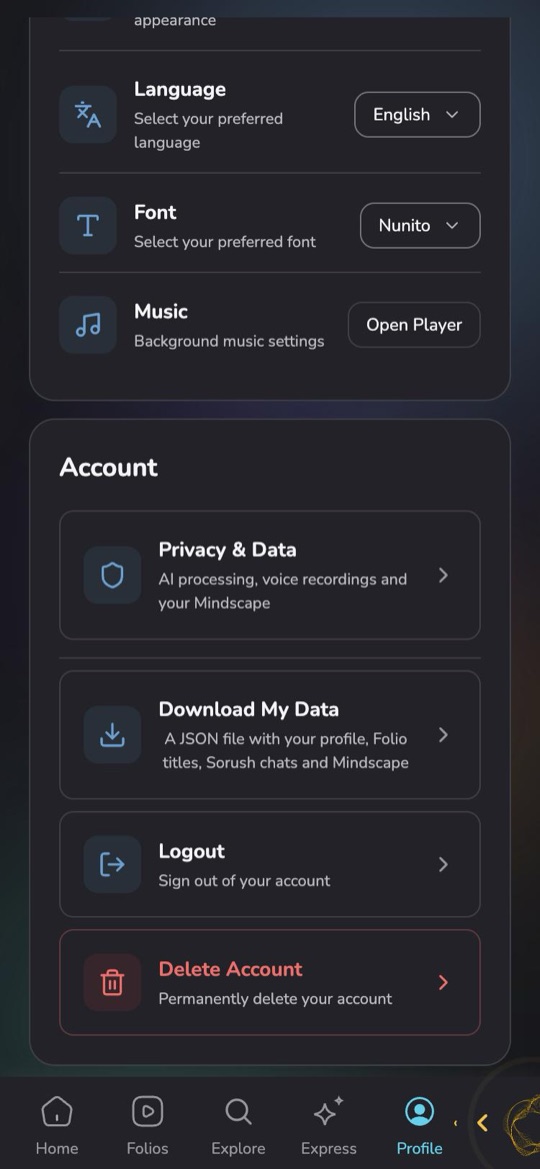
The documentation was completed: a master release brief of numbered items across several workstreams, flows and states for the areas above, and a notification strategy to be turned into rules. Several of the specified areas, such as Privacy and Data, voice and Mindscape controls, data download and account deletion, are in the live app today. The product isn't fully in production yet.
The items in the brief are requirements and decisions, not a list of shipped features; their implementation is tracked separately. The notification strategy hasn't been measured for its effect on engagement.
I can walk through the full spec and handoff files in an interview.
08What I learned
A consent screen is only a promise until the backend enforces it, so I specify the behaviour behind each control, not just the control.
Naming the kind of message (feedback, task status, insight) is what makes notification rules possible.